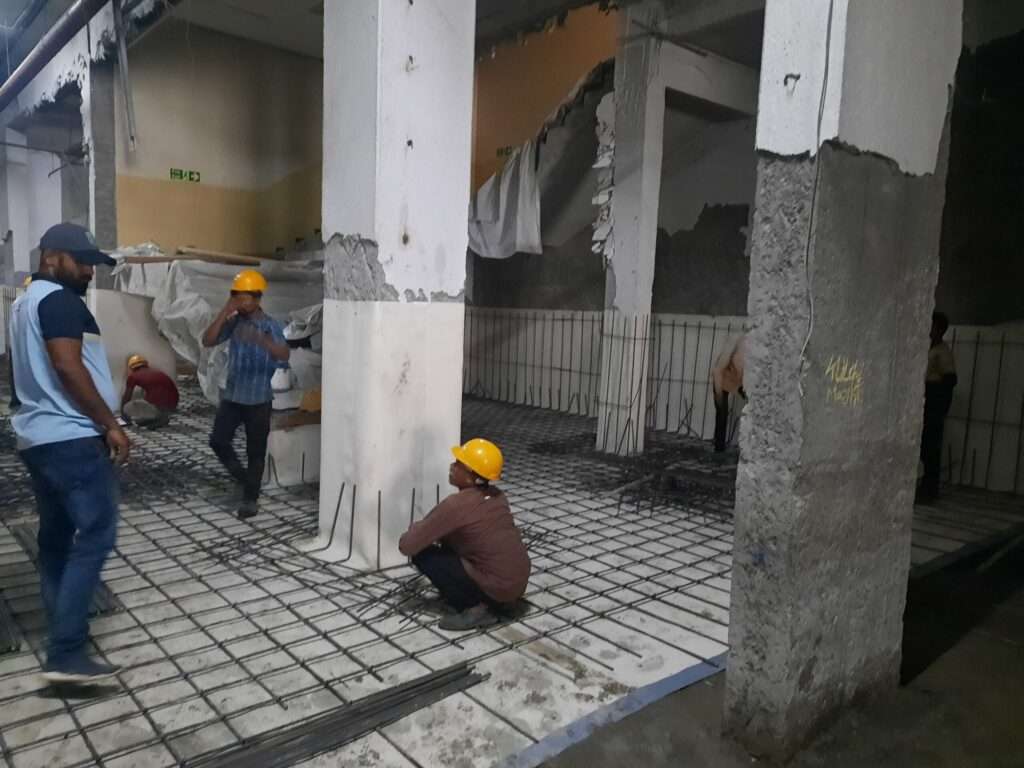
Rock anchoring with Hilti chemical(ALL Chemicals)
Location: India
Service Mode: Offline
Payment Mode: Offline / Online
Service Duration: 2–5 Days
To cater to the variegated demands of our precious clients, we are highly engrossed in providing a qualitative Passive Rock Anchoring Service. This service is widely used in construction, infrastructure, slope stabilization, retaining walls, tunnels, and geotechnical engineering projects where strong and reliable rock support is required.
Our Passive Rock Anchoring Services are carried out under the strict supervision of our experts who maintain all the quality standards prescribed by the leading industry. To execute this service, our highly experienced professionals use the best quality tools, premium-grade anchoring materials, and high-end technology to ensure maximum safety and long-term structural stability.
Moreover, the offered service is highly reliable, cost-effective, and performed in full compliance with set quality standards. We ensure timely project completion with professional execution and dependable support for all types of engineering projects.
Benefits of Passive Rock Anchoring Service
- Strong structural support for slopes, tunnels, and retaining walls
- Improved ground stabilization and safety
- Cost-effective and reliable anchoring solutions
- Advanced tools and modern technology for precise execution
- High professionalism and industry-standard quality control
- Suitable for residential, commercial, and industrial projects
Rock Anchoring Using Hilti Chemical Products
Rock anchoring using Hilti chemical products involves the installation of high-strength anchors into rock surfaces for construction, mining, geotechnical engineering, and infrastructure projects. Hilti is a trusted brand that provides advanced chemical anchoring solutions including epoxy and hybrid adhesive systems for strong, durable, and long-lasting anchoring performance.
1. Site Assessment
Before starting rock anchoring work, a complete site assessment is conducted to evaluate geological conditions, rock quality, load requirements, and project specifications. This helps in selecting the most suitable anchor type and adhesive system.
2. Anchor Selection
Based on the site inspection, engineers choose the appropriate type, size, and configuration of anchors. Hilti offers a wide range of chemical anchors suitable for different rock conditions and load-bearing requirements.
3. Surface Preparation
The rock surface must be clean and free from dust, loose particles, oil, or debris that may affect the bonding process. Proper surface preparation ensures maximum adhesive strength and anchor performance.
4. Drilling Holes
Holes are drilled into the rock according to the required depth and diameter as per engineering design and manufacturer guidelines. Correct drilling dimensions are critical for safe and effective anchoring.
5. Blow-out and Dust Removal
After drilling, all dust and debris are removed using compressed air, wire brushes, or suitable cleaning tools. This step is essential for proper chemical bonding inside the drilled hole.
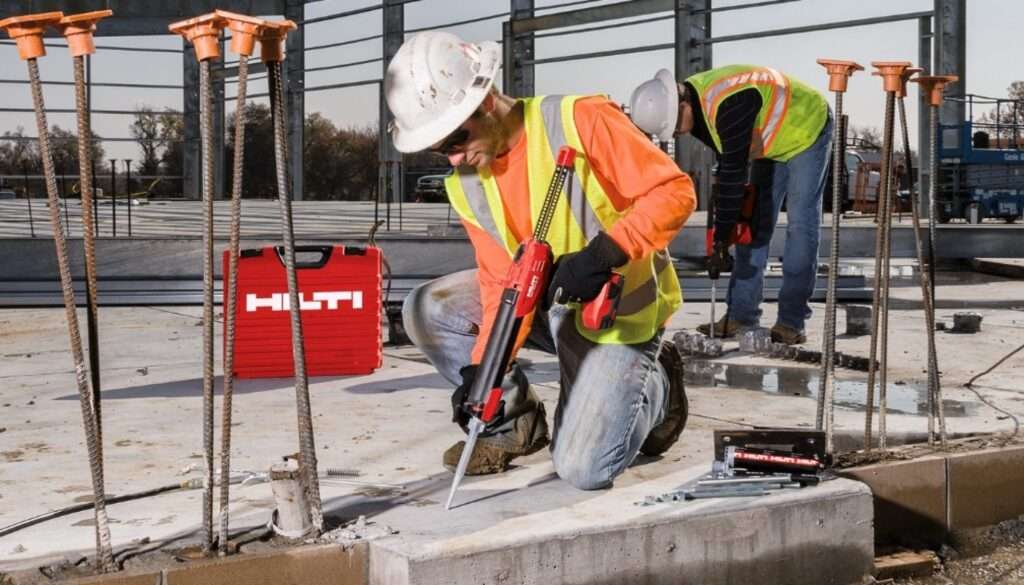
6. Injection of Hilti Chemical Adhesive
The selected Hilti chemical adhesive, such as epoxy or hybrid adhesive, is injected into the drilled holes using a professional dispensing tool. The adhesive creates a strong bond between the anchor and the rock surface.
7. Inserting the Anchor
The anchor is inserted into the adhesive-filled hole with correct alignment and required embedding depth. The anchor is rotated during installation to ensure even adhesive distribution and strong bonding.
8. Curing Time
The adhesive is allowed to cure completely based on the specific Hilti product and environmental conditions. Proper curing is necessary before applying any structural load.
9. Load Testing
After curing, load testing may be performed to verify that the anchor can safely support the required structural loads and project specifications.
10. Documentation
Complete documentation of drilling depth, adhesive quantity, anchor specifications, and testing results is maintained for quality control and future project reference.
It’s essential to follow Hilti’s product specifications, guidelines, and recommendations for proper installation. Consulting with Hilti technical support or engaging certified professionals is advisable to ensure the correct use of their chemical anchoring products.
Service Gallery